|
The floor we're starting with has
several rough spots on it's surface.
|
The first step is to scrape as much
as possible with a floor scraper.
|
Then, clean the dirt off with a mop
full of soap and water.
|
If there are raised areas or holes,
skim the floor with Serico
|
|
Once that's dry,
Bonding Primer is rolled on.
|
Get the Drill and Mixer.
Be sure the mixer has rounded edges.
|
Get the Overlay Powder and
add the Enforcer Liquid (about 2:1).
|
Drill to a smooth consistency.
Generally, a paste-like viscosity.
|
|
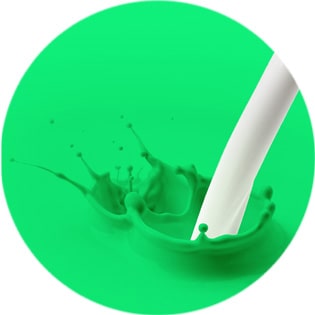
This illustrates the Overlay thickness
once mixed thoroughly with Enforcer.
|
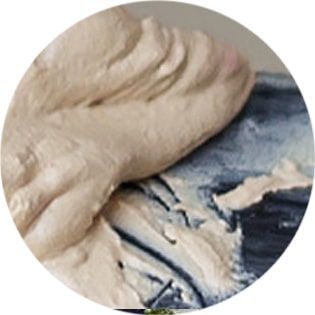
Spread the Overlay in a "Figure 8"
anywhere from 1/16" to 1/4" thickness.
|
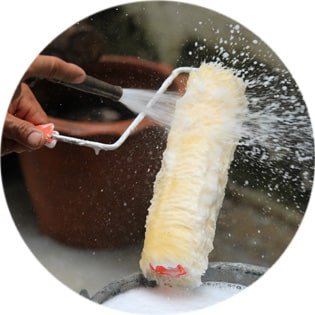
For better trowel "glide" as material sets
spray the trowel with more Enforcer.
|
You should not spray the
Overlay directly with Enforcer.
It will seal the surface and not stain.
|
|
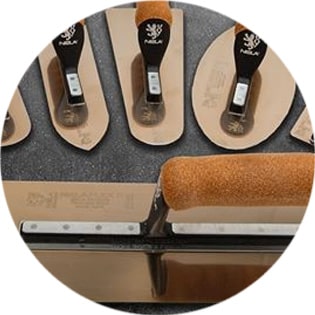
Trowel the Enforcer into the
Overlay for a smooth finish.
|
If there are rough areas or lines,
sand the Overlay with a palm sander.
|
Now, before staning, the floor should be
hydrated with a great deal of water.
Scrub water in with a Blue Scrub Brush.
|
While still wet, Oxidizers are
sprayed on with a bug sprayer.
All sprayer parts MUST be plastic.
|
|
Subsequent Oxidizers can be sprayed
or drizzled on the surface.
|
After about 2-3 hours, residue
should be mopped off with water.
|
3-4 coats of Liquid Hardener
are then mopped on.
Allow dry time between thin coats.
|
Two layers of Brown Gravy Wax
are then buffed in for
additional protection and sheen.
|